Big Ten Realignment: What's Next for Indiana-MSU Football?
The landscape of college football is in constant flux, and few conferences embody this evolution more dramatically than the Big Ten. With recent expansions bringing powerhouse programs from the West Coast into the fold, traditional rivalries face an uncertain future. Among these, the storied contest between the
Indiana Hoosiers and the
Michigan State Spartans, battling for the Old Brass Spittoon, stands at a critical juncture. Once an annual fixture, the Big Ten's new scheduling model threatens the consistent rhythm of this unique Midwestern showdown.
For decades, the mention of
Indiana Michigan State football has conjured images of hard-fought battles, often with the tarnished Old Brass Spittoon gleaming on the sidelines. But what does the latest wave of realignment mean for the immediate and long-term future of this rivalry? Let's delve into the history, the current situation, and what fans can expect.
The Enduring Legacy of the Old Brass Spittoon
At the heart of the
Indiana Michigan State rivalry lies one of college football's most unusual and charming trophies: the Old Brass Spittoon. First introduced in 1950, this antique vessel wasn't a grand, custom-made prize but rather a simple brass spittoon purchased for $25 by Michigan State students to "fire up" their team before a crucial game against the Hoosiers. Indiana's student senate accepted the challenge, solidifying a tradition that has now lasted over seven decades.
While Michigan State holds a commanding lead in the overall series, with 50 wins to Indiana's 20 (and 2 ties), the Spittoon has become a symbol of pride, particularly for the underdog Hoosiers, who relish any opportunity to claim it. The Spartans’ dominance, including a 50-17-1 record in games played since the trophy's inception, has, at times, overshadowed the intensity that defines other Big Ten rivalries. However, it only makes Indiana’s victories, like their historic 1967 upset over defending national champion Michigan State that helped secure a Rose Bowl berth, all the more memorable. For a deeper dive into the origins and moments of this rivalry, check out our piece on
Old Brass Spittoon: The History of Indiana vs. Michigan State.
A Rollercoaster Schedule: From Sporadic to Annual and Back
The consistency of the
Indiana Michigan State matchup has always been at the mercy of conference scheduling. Before the Big Ten's initial expansion in 2011, the series experienced several stoppages. Due to the rotating conference schedule and the absence of a "protected rival" status, the teams would sometimes go years without playing each other, such as in 1971-72, 1979-80, 1999-2000, and 2009-10. These interruptions often frustrated fans who valued the annual tradition.
The landscape shifted significantly with the Big Ten's divisional split in 2011. Even though Indiana and Michigan State were placed in separate divisions, they were designated as "cross-over" rivals, guaranteeing an annual contest through the 2013 season. This arrangement was a welcome relief, ensuring the Spittoon remained in play every year.
Further expansion brought Maryland and Rutgers into the Big Ten starting in 2014. This led to a geographical realignment that placed both Indiana and Michigan State squarely in the Big Ten East Division. This move serendipitously assured the annual renewal of the rivalry, as all divisional opponents play each other every season. For nearly a decade, fans could count on the
Indiana Michigan State game, a consistency that had been elusive in previous eras. Michigan State even defeated Indiana in 2015 on their way to a Big Ten Championship and a College Football Playoff appearance, showcasing the high stakes sometimes involved.
Big Ten Expansion: The Unprotected Future
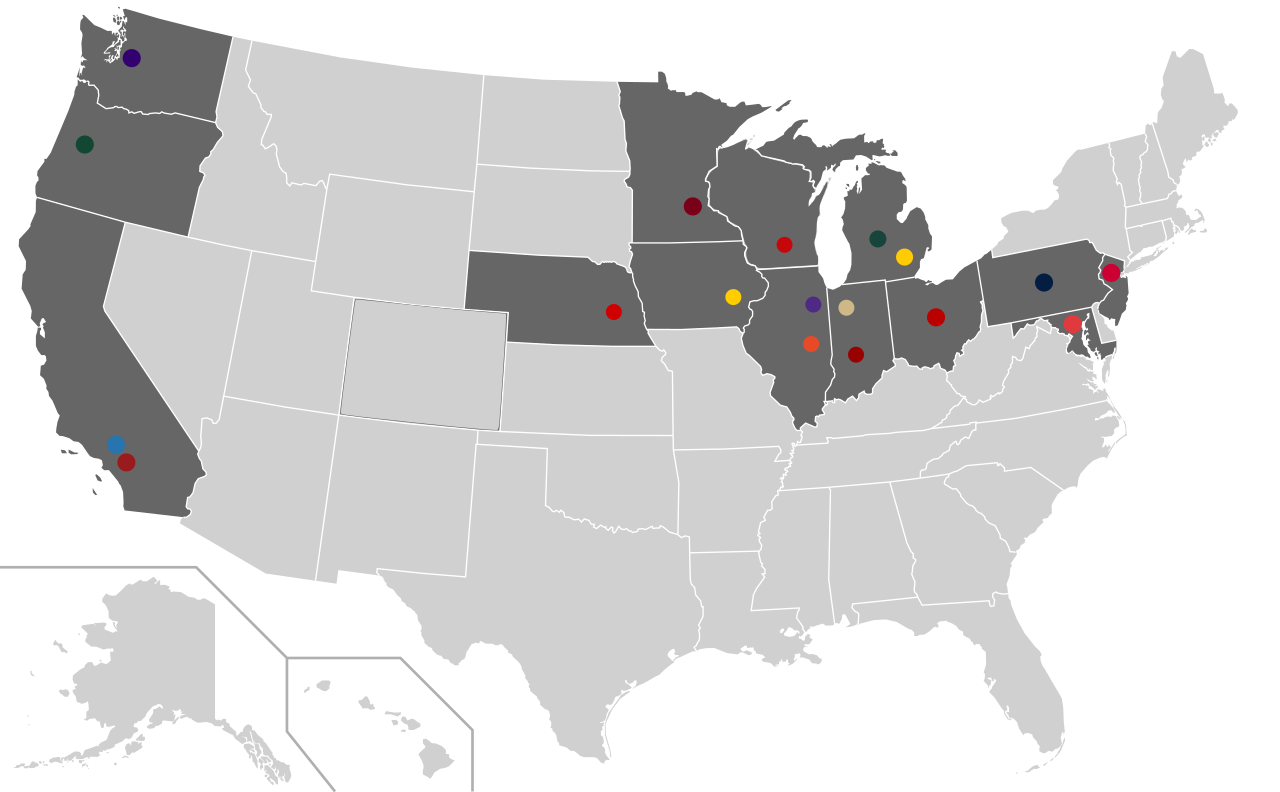
The latest chapter in Big Ten realignment, announced in 2023, is perhaps the most seismic yet. With the additions of West Coast powerhouses Oregon, UCLA, USC, and Washington, the conference has grown to an unprecedented 18 teams. This expansion necessitated a complete overhaul of the league's football scheduling model for the 2024 to 2028 seasons.
The outcome for the
Indiana Michigan State rivalry is significant: it was *not* designated as a "protected matchup" under the new scheduling format. This means the annual guarantee of their contest has been removed. Instead of playing every year, the Hoosiers and Spartans are scheduled to meet in 2024, 2025, and 2027 within this five-year window. While they will still play frequently, the absence of an annual commitment marks a return to a more sporadic schedule, reminiscent of the pre-2011 era.
Implications of a Less Frequent Rivalry:
- Loss of Continuity: Annual matchups allow rivalries to build momentum, create consistent narratives, and feature recurring player battles. Less frequent games can dilute this.
- Fan Engagement: Regular games foster strong fan traditions, travel plans, and passionate discussions. Interruptions can weaken these bonds over time.
- Recruiting Impact: For teams like Indiana, a historical rivalry with a program like Michigan State offers a high-profile game to showcase talent. Less frequent matchups might reduce this consistent opportunity.
- Big Ten's Priorities: The new schedule prioritizes competitive balance, rotating opponents, and ensuring the new West Coast members are integrated effectively, which sometimes comes at the cost of traditional rivalries.
This shift underscores the challenge the Big Ten faces in balancing its vast geographical footprint and competitive aspirations with the preservation of its storied rivalries.
The Shifting Tides: Indiana's Resurgence and Future Prospects
Despite Michigan State's historical dominance, the
Indiana Michigan State rivalry has shown signs of a shifting dynamic in recent years. Indiana has demonstrated a notable resurgence, winning four of the last seven meetings. This recent competitiveness adds a fresh layer of intrigue to a rivalry long characterized by MSU's strong hold on the Spittoon.
The provided context for this article even paints a picture of a hypothetical future where Indiana achieves unprecedented success against Michigan State. It imagines the Hoosiers winning back-to-back games in 2024 (47–10) and 2025 (38–13), with the latter victory propelling them to their third-ever Big Ten title, a second consecutive College Football Playoff appearance, and even a historic national championship. While these specific outcomes are speculative future scenarios, they highlight the potential for competitive shifts within the rivalry and the aspirations of the Indiana program. They suggest that even with an overall historical imbalance, every game for the Spittoon remains an opportunity for a program to make a statement and potentially rewrite its own narrative. For more on how the dynamic might be changing, explore
Indiana vs. Michigan State: The Spittoon Rivalry's Recent Shift.
What's Next for Fans and the Rivalry?
For fans of both the
Indiana Hoosiers and
Michigan State Spartans, the future schedule demands a new appreciation for every contest. While the annual guarantee is gone, the games in 2024, 2025, and 2027 will be even more significant. Each meeting for the Old Brass Spittoon will become a cherished event, rather than a given.
Tips for Fans:
- Mark Your Calendars: Be sure to highlight the scheduled Indiana Michigan State games for 2024, 2025, and 2027. These are now must-watch events.
- Support Advocacy: While the schedule is set for the short term, continued fan enthusiasm and advocacy can influence future scheduling decisions in later cycles.
- Celebrate the History: Use the less frequent games as an opportunity to reflect on the rivalry's rich past, the memorable moments, and the unique tradition of the Old Brass Spittoon.
- Embrace the New Big Ten: While one rivalry shifts, the conference now offers an incredible array of new matchups and competitive challenges.
Ultimately, the Big Ten’s pursuit of a geographically balanced, competitive, and expansive schedule has come with trade-offs. The
Indiana Michigan State rivalry, with its quirky trophy and passionate fan bases, is one such tradition adapting to the new era.
Conclusion
The Big Ten realignment presents a complex challenge for preserving traditional rivalries like the Battle for the Old Brass Spittoon. While the annual contest between
Indiana Michigan State will no longer be guaranteed, the rivalry remains deeply ingrained in the fabric of both programs and their fan bases. The games scheduled for 2024, 2025, and 2027 will be more anticipated than ever, each offering a chance for either the Hoosiers or the Spartans to claim bragging rights and the cherished Old Brass Spittoon. As college football continues to evolve, the spirit of these historic matchups, regardless of their frequency, will undoubtedly endure.